

Learn the Rhythm.
Join the Tradition.
Whether you're taking your very first steps or looking to deepen your connection to old-time dance traditions, Dance Appalachia offers a growing library of lessons, practice tracks, and educational resources designed to help you learn at your own pace.
Current Courses
Beginner Clogging
Buck Dancing & Flatfoot
Included with Membership
👣 2 complete courses
🎥 46 instructional videos
⏱️ Over 4 hours of lessons and practice tracks
🎵 Downloadable music resources
✅ Progress tracking
⏩ Adjustable playback speeds
📚 New lessons and resources added regularly
Learn at Your Own Pace
Track your progress as you move through the courses
Slow down practice tracks and lesson videos
Repeat lessons as often as needed
Download music resources for independent practice
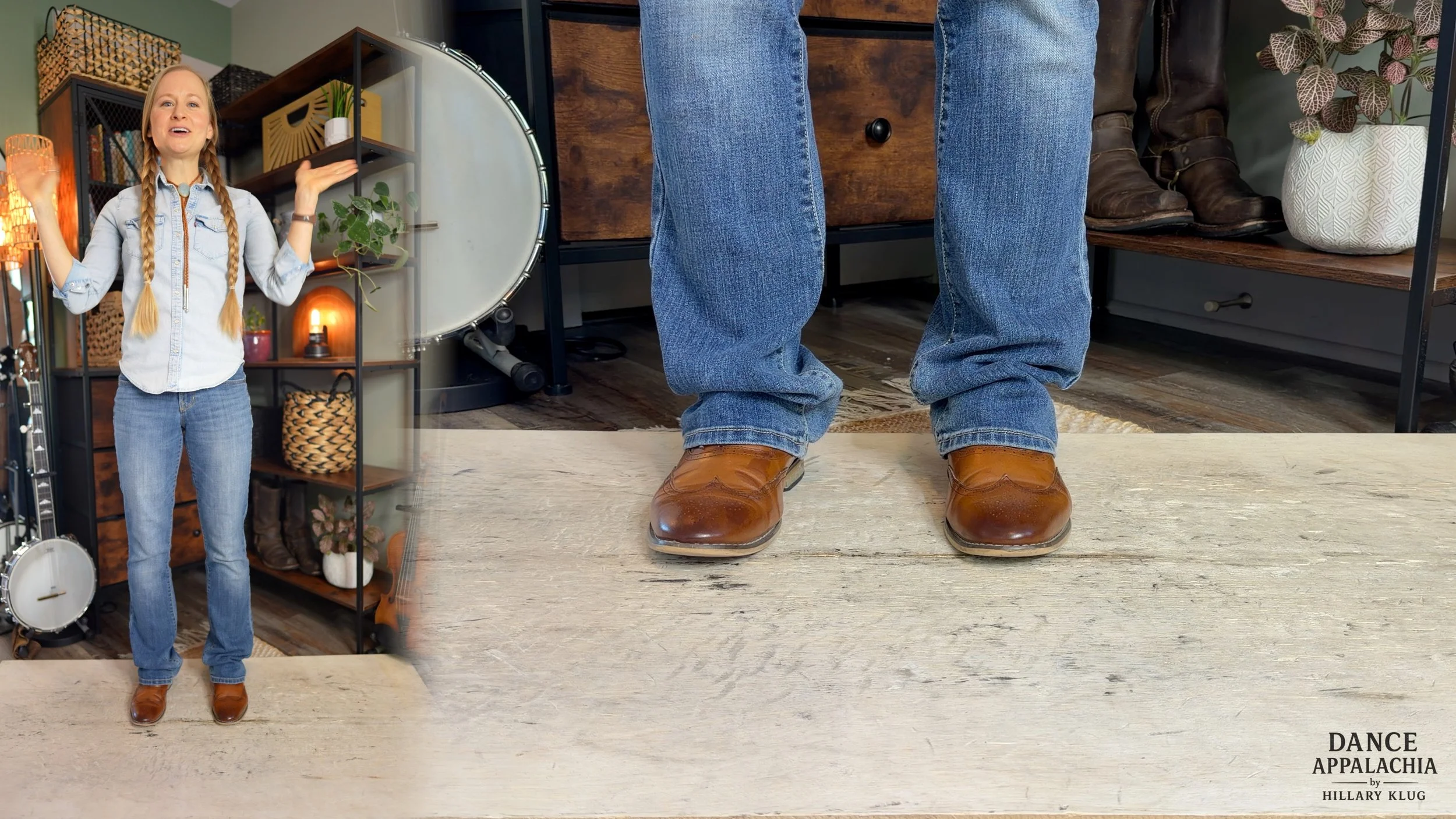
Learn old-time Appalachian and Southern dance traditions through step-by-step lessons, practice tracks, rhythm exercises, and community-centered learning. Whether you’re a complete beginner or already dancing, you’ll find resources designed to help you learn at your own pace while connecting more deeply with the rhythm, music, and spirit behind these traditions. New lessons and resources added regularly. Beginner-friendly.
Frequently Asked Questions
-
No prior dance experience is required.
The lessons are designed to help complete beginners build a foundation step by step. If you've never danced before, don't worry—that's exactly why the Beginner Clogging course exists.
Go at your own pace, repeat lessons as often as needed, and remember that rhythm and coordination develop over time.
-
Any hard-soled shoes are fine, including Oxford-style dress shoes, tap shoes, boots, or other shoes with smooth soles. I generally recommend avoiding rubber-soled athletic shoes because they tend to grip the floor and make movement more difficult.
Personally, I prefer Oxford-style dress shoes for practice, but I often dance in boots because they're louder... and they look cool 😄
-
Not necessarily. If you already have a hard surface such as a wood floor, kitchen floor, or porch, you may not need a dance board at all.
If you'd like a dedicated practice surface, a simple sheet of plywood works great and is inexpensive. I recommend using a board that's at least 2' x 3'.
I generally don't recommend dancing on concrete for extended periods, as it can be hard on your ankles, knees, and joints.
-
Absolutely not.
People can begin learning rhythm and dance at any age. The most important things are patience, consistency, and enjoying the process.
The current courses are designed for people who can walk comfortably and balance on one foot at a time without needing support. As Dance Appalachia grows, I hope to expand the educational offerings to include additional learning opportunities for people with different physical abilities, including traditions such as French Canadian podorythmie, which is performed while seated.
-
Not much.
A small open area where you can move comfortably without bumping into furniture is usually enough. A kitchen, porch, living room, garage, or small practice space can work well.
As a general guideline, about 3' x 4' of open space is sufficient for most of the lessons on this site.
-
Yes.
You may cancel your membership at any time. Your access will continue through the remainder of your current billing period, and you will not be charged again after cancellation.
-
Dance Appalachia is an ongoing project, and I plan to continue adding new lessons, practice tracks, educational resources, and community features over time.
As the library grows, members will gain access to new material covering additional steps, styles, traditions, rhythms, and learning opportunities.
-
I'd love to hear from you.
Dance Appalachia is a growing project, and your feedback helps make it better. If you have questions about a lesson, suggestions for future content, or ideas for improving the learning experience, feel free to reach out.
You can contact me anytime at: