
Our Mission
Dance Appalachia exists to celebrate, document, share, and help carry forward the living traditions of Appalachian and Southern percussive dance.
What began as a small effort to highlight the incredible dancers within these traditions has grown into a place where people from around the world are discovering their rhythms, stories, and communities for the first time.
Through video, education, and community, Dance Appalachia honors the dancers and musicians who keep these traditions alive while creating a welcoming path for new generations to learn, connect, and participate.
This project is rooted in deep gratitude for the people, gatherings, festivals, and communities where these traditions continue to thrive.
What You'll Find Here
Explore
Discover dancers, festivals, competitions, and old-time dance traditions from across Appalachia and the American South. Through videos, stories, and community highlights, Dance Appalachia celebrates the people and places keeping these traditions alive.
Learn
Explore lessons, rhythm exercises, practice tracks, and educational resources designed to help beginners and experienced dancers alike deepen their understanding of old-time dance traditions and their connection to the music.
Connect
Join a growing community of dancers, musicians, learners, and tradition lovers. Share experiences, ask questions, discover events, and connect with others who are passionate about preserving and carrying these traditions forward.
Meet the Founder
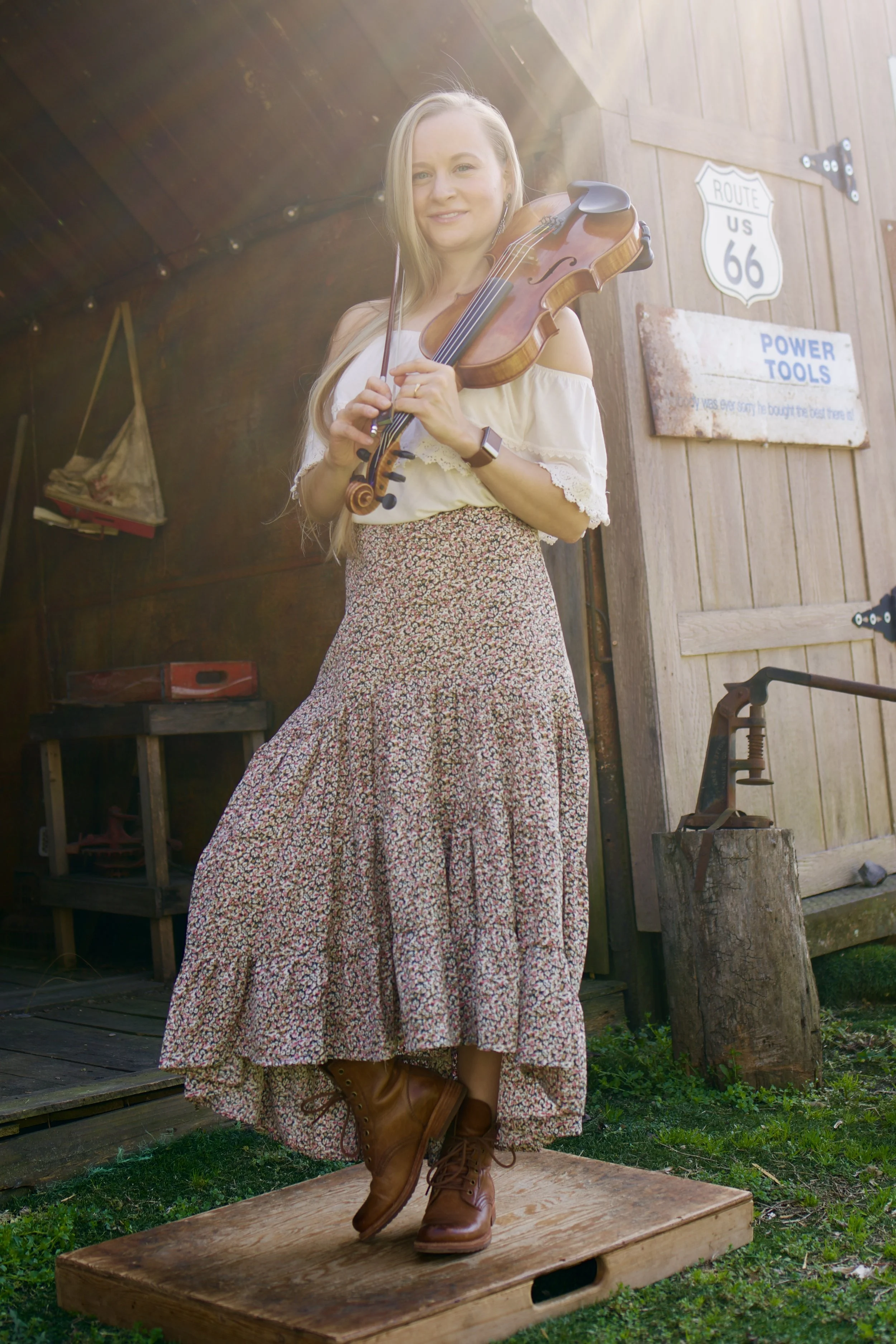
Hi, I'm Hillary Klug.
I'm a fiddler, dancer, and educator from Tennessee, and Dance Appalachia grew out of my love for old-time music and dance traditions.
I grew up learning fiddle tunes, clogging, buck dancing, and flatfooting through the communities, festivals, teachers, and tradition bearers who continue to keep these traditions alive today.
Over the years, I've had the opportunity to perform around the world, but some of my greatest inspiration still comes from local dance floors, jam sessions, competitions, and gatherings here in Tennessee and throughout the Appalachian region.
Through Dance Appalachia, I hope to celebrate the communities that shaped me, highlight the dancers who continue to carry these traditions forward, and help create a welcoming path for new generations to discover the rhythm, music, and spirit of old-time dance.
The Story Behind Dance Appalachia
Dance Appalachia began with a simple idea: create a place to celebrate the incredible dancers who keep old-time Appalachian and Southern dance traditions alive.
Over the years, I found myself filming beautiful moments at festivals, competitions, jams, and community gatherings—buck dancers trading steps, flatfooters driving the rhythm of a fiddle tune, and musicians and dancers sharing the floor in the kind of spontaneous magic that defines these traditions.
Many of those videos weren't about me at all. They were about the dancers, the communities, and the traditions themselves.
Posting those videos on my personal pages never quite felt right, so I created Dance Appalachia as a place to share and celebrate those moments.
What began as a small collection of videos quickly grew into something much larger. Dancers from across Appalachia and the American South appeared in the clips, and people within the community expressed how meaningful it felt to see these traditions recognized, documented, and shared. At the same time, viewers from around the world began discovering these dances for the very first time.
As the audience grew, one question kept appearing again and again:
"Where can I learn this?"
People were fascinated by the rhythms, the footwork, and the connection between music and dance, but many had no idea where to begin.
That question helped shape the next chapter of Dance Appalachia.
Today, Dance Appalachia continues to celebrate the dancers, festivals, competitions, and communities that keep these traditions alive while also creating a welcoming place for newcomers to explore, learn, and connect.
My hope is that by sharing these rhythms with the world, more people will discover their beauty, support the communities that sustain them, and perhaps find their own place within the tradition.
Because traditions stay alive when they are shared, practiced, and passed on.
— Hillary Klug 🎻 👣 ♥️